Category: IT in Business

Unified IT Solutions: Seamless Workflows Across Devices

Your sales manager is mid-pitch when the presentation freezes. The updated proposal is on her laptop back at the office. The client waits. Fifteen minutes of fumbling later, the deal feels less certain. She walks out knowing the competitor won’t have this problem.

This isn’t bad luck. It’s an infrastructure failure and exactly the kind of problem unified endpoint management is designed to prevent.

According to Gartner, businesses lose an average of 8.2 hours per employee every week to device switching and file access issues. For a 20-person team in Lagos, that’s ₦12.3 million annually in lost productivity. The cost isn’t just time; it’s deals that don’t close, clients who question your professionalism, and teams too frustrated to perform at their best.

8 Hours Per Week, Per Employee  

Consider what 8 hours actually means. That’s a full workday every week where your team is fighting technology instead of using it. New employee onboarding takes 6-8 hours when your IT team manually configures each device, laptop, phone, and tablet, and ensures everything syncs. With unified systems, that same process takes 45 minutes.

Your IT team currently spends 3 hours weekly pushing updates to individual devices, manually patching security vulnerabilities, and troubleshooting sync failures. Unified endpoint management deployment handles this automatically overnight with zero downtime. Updates roll out simultaneously. Security patches deploy without anyone noticing. The IT team shifts from maintenance to strategy.

The bottleneck isn’t your people; they’re capable. Its infrastructure is built for single devices in a multi-device world. When your finance manager starts a budget report on her desktop, continues on her tablet during her commute, and presents from her phone in a meeting, the technology should support that workflow, not obstruct it.

How Tranter IT Eliminates the Friction  

One of our clients, a Lagos-based logistics firm with 35 employees across three locations, cut device-related support tickets by 71% in the first month after deployment. Their field operations team now works across office desktops, delivery tablets, and personal phones without a single sync issue. The CEO told us the change was immediate: “Our drivers used to call IT every time they switched devices. Now they work.”

Here’s what changed in their environment. Software updates deploy to all 35 devices simultaneously at 2 AM, no staggered rollout, no version conflicts. Security patches go live without interrupting anyone’s workday. Files created on any device appear instantly on all others. The IT manager monitors the entire fleet from one dashboard instead of physically touching each laptop, tablet, and phone. When they hired 8 new employees last quarter, onboarding took 6 hours total instead of 48.

For businesses running hybrid models: Victoria Island headquarters, Lekki satellite office, remote workers in Abuja, unified IT means everyone operates at the same speed regardless of location or device. BYOD policies become secure instead of creating compliance nightmares. Your business can scale from 20 employees to 200 without your IT complexity multiplying proportionally, using unified endpoint management.

The technology isn’t experimental. It’s proven infrastructure that enterprises have used for years, and it’s now accessible to Nigerian SMEs without enterprise budgets.

What This Costs You Right Now  

Every week you delay, your team loses another 8 hours per person to device friction. That’s time they could spend closing deals, serving customers, building relationships, or solving actual business problems instead of technology problems.

But the hidden cost is the competitive position. While your team struggles with file access and device switching, your competitors are moving faster. Their proposals reach clients first. Their teams respond to opportunities immediately. Their presentations don’t stall mid-pitch. Unified endpoint management isn’t just operational efficiency; it’s a competitive advantage.

The gap between where you are and where you need to be isn’t as wide as it seems. Most deployments reach full functionality within 30 days. The ROI typically shows up in month one.

Free Assessment -This Week Only  

Book a 30-minute consultation this week, and we’ll audit your current setup, calculate your exact productivity loss in hours and naira, and map a deployment plan with ROI projections for your first 90 days. No sales pitch, just data specific to your business.

We’re limiting this to 5 businesses this month because each assessment requires dedicated analysis time. Response within 4 hours of booking.

 Tranter IT: Unified IT solutions for Nigerian businesses that can’t afford to wait.

Contact us: 📧 enquiries@tranter-it.com 📞 +234 8183 405 221 🌐 www.tranter-it.com
Cybersecurity in Africa 2026: Protecting Nigeria’s Digital Transformation

The smartest companies are now putting cybersecurity at the centre of their digital strategies, not as an afterthought. The digital world is moving at lightning speed. Every click, every file, every cloud connection is part of a massive transformation that’s reshaping how we live and work. But here’s the thing: the faster technology evolves, the smarter cybercriminals get. As we step into 2026, it’s clear that digital transformation and cybersecurity are no longer separate conversations; they’re two sides of the same coin.

And with Cybersecurity Awareness Month upon us, there’s no better time to talk about what the future holds, especially for businesses in Nigeria and across Africa that are embracing digital change at record speed. At Tranter IT, Nigeria’s foremost distributor of ManageEngine Solutions, we’ve seen how the right tools and strategies can help organisations move fearlessly into the future while staying secure. 

Digital Transformation: The Necessity of Proactive Cybersecurity

Digital transformation used to be about convenience: faster workflows, smarter systems, and more automation. But now, it’s also about trust. Businesses are relying on digital tools to manage everything from finances and customer data to critical infrastructure. That’s a huge responsibility and an even bigger target for cyberattacks.

As 2026 approaches, organisations are realising that transformation without security is like building a mansion without doors. It looks impressive but invites trouble. The smartest companies are now putting cybersecurity at the centre of their digital strategies, not as an afterthought.

AI & Automation: The Future of Threat Detection in Cybersecurity 2026

Let’s be honest: manual monitoring and threat detection can’t keep up with today’s cyber threats. That’s where artificial intelligence (AI) and automation come in. These technologies are already helping IT teams detect unusual behaviour, stop breaches before they happen, and save hours of response time.

Tranter IT’s suite of solutions makes this easier than ever. From automating patch updates to monitoring suspicious activity across devices, AI-driven tools are changing the game for security teams. The goal isn’t to replace humans, it’s to help them work smarter and faster. In 2026, the businesses that blend human intuition with machine precision will lead the way.

Implementing Zero Trust: The Smart Approach to Modern Security

If there’s one phrase that defines modern cybersecurity, it’s Zero Trust, and no, it’s not about being paranoid. It’s about being smart. The idea is simple: don’t automatically trust anyone or anything inside or outside your network. Verify everything.

As remote work and hybrid systems become the norm, Zero Trust helps protect sensitive data, no matter where employees log in from. Tranter IT’s identity and access management tools (part of the ManageEngine suite) make it possible to control who has access to what and when. This approach keeps data safe, minimises insider risks, and ensures compliance with global security standards.

Achieving Cloud Confidence: Real-Time Security and Control 

The cloud has become the heart of modern business operations, and it’s not slowing down. But with great storage comes great responsibility. Many organizations are realizing that while cloud services offer flexibility, they also introduce new risks if not managed properly.

In 2026, cloud security will be about visibility and control, knowing exactly where your data lives, who’s accessing it, and how it’s being used. With solutions like Cloud Security Plus, IT teams can monitor cloud activity in real-time, detect anomalies, and respond instantly before damage is done.

Building a Culture of Cyber Awareness (The Human Firewall)

No technology is foolproof if people aren’t trained to use it wisely. Cybersecurity in 2026 isn’t just a tech issue; it’s a people issue. Employees are often the first line of defence and sometimes the weakest link. That’s why building a culture of awareness, responsibility, and continuous learning is essential.

During Cybersecurity Awareness Month, Tranter IT encourages businesses to invest not just in tools, but in people. From regular phishing simulations to simple password hygiene, awareness campaigns can make the difference between a breach and a breakthrough.

The Future Is Secure: If You Make It So

Digital transformation is here to stay, but its future depends on how well we protect it. As businesses embrace new technologies, automation, and cloud ecosystems, cybersecurity must evolve right alongside them.

At Tranter IT, we believe in empowering organisations with the right tools, insights, and confidence to thrive securely in a digital-first world. With smart solutions, you’re not just transforming your business—you’re safeguarding its future.

The future of tech is fast, connected, and full of opportunity. Let’s make sure it’s secure, too.

Stay smart. Stay protected.

Contact us today https://www.tranter-it.com/contact-us/

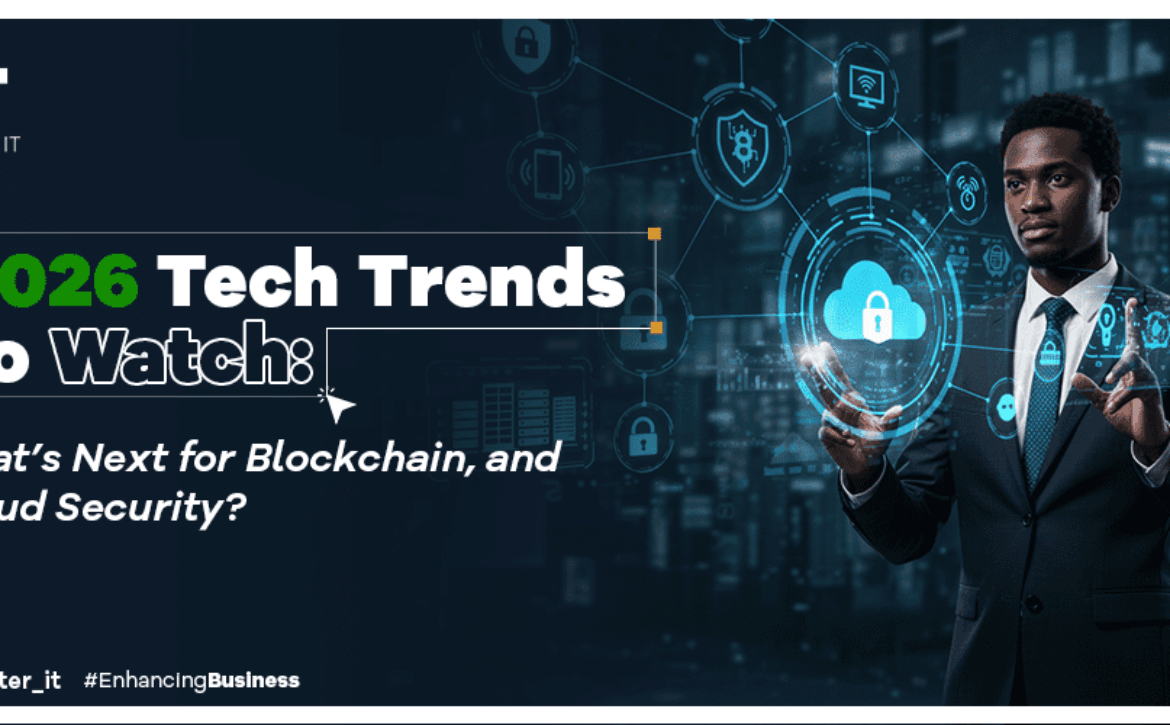
The Future Is Encrypted: 2026 Tech Trends Shaping Blockchain, and Cloud Security

The tech world never sits still. Cybersecurity is everyone’s business. Just when we think we’ve seen it all, an innovation shakes things up, and 2026 is shaping up to be no different. As we celebrate Cybersecurity Awareness Month, there’s no better time to peek into the future and see how key technologies like Blockchain, smart devices, and Cloud Security are evolving and what that means for businesses here in Nigeria and beyond.

At Tranter IT, we’re all about staying ahead of the curve. As the foremost distributors of ManageEngine Solutions, we’ve seen firsthand how the right tech tools can transform operations, improve efficiency, and most importantly, strengthen cybersecurity. So, let’s break it down, no jargon, no geek-speak, just real talk.

Blockchain: Beyond Crypto and Buzzwords

Blockchain isn’t just for Bitcoin bros anymore. While the hype around crypto has cooled, the technology behind it is finding new life in enterprise use. In 2026, expect blockchain to play a bigger role in identity verification, supply chain transparency, and secure data sharing.

For cybersecurity, this means fewer opportunities for data tampering and stronger digital trust. Imagine verifying every transaction or record instantly, no middleman, no manipulation. That’s the power of blockchain-backed systems.

Forward-thinking organisations in Nigeria are already experimenting with blockchain-based solutions to secure sensitive information and verify digital identities, a move that could redefine data integrity in the coming years.

Smarter Devices, Bigger Targets

From smart factories to connected hospitals, smart devices are everywhere, and they’re not slowing down anytime soon. The catch? Every “smart” device is also a potential entry point for hackers.

By 2026, smart security will no longer be optional; it’ll be mission-critical. Businesses will need to move from reactive to proactive protection, ensuring devices are patched, monitored, and managed at all times.

This is where our tools come in clutch. Solutions like Endpoint Central and Log360 help IT teams track, monitor, and secure every connected device, all from one dashboard. Because let’s be honest, you can’t manually babysit a thousand smart sensors and cameras. Automation is your new best friend.

Cloud Security: The New Cyber Battlefield

The cloud used to feel like a “nice-to-have.” Now, it’s the backbone of modern business. But as more organisations migrate to cloud environments, cybercriminals are following close behind.

In 2026, cloud security will focus on visibility and control. Companies are realising that it’s not enough to just store data in the cloud; they need to see who’s accessing it, from where, and why.

Expect to see increased adoption of Zero Trust frameworks. tighter identity and access management. and AI-driven monitoring that detects threats in real time. Our cloud security suite already helps organisations lock down access, monitor activity, and prevent data leaks before they happen, turning the cloud from a risk zone into a resilience zone.

The Bottom Line: Cybersecurity is Everyone’s Business

If there’s one takeaway from these 2026 trends, it’s that security is no longer a back-office concern. It’s a business strategy. Whether you’re running a startup or managing a multinational, your ability to protect data, systems, and users directly affects your success.

As we celebrate Cybersecurity Month, Tranter IT encourages businesses to think ahead. The future of tech will be fast, connected, and intelligent, but only the secure will thrive.

So, here’s the question: Is your business ready for what’s next?

Stay protected. Stay ahead.

Contact us now enquiries@tranter-it.com or call +2348183405221

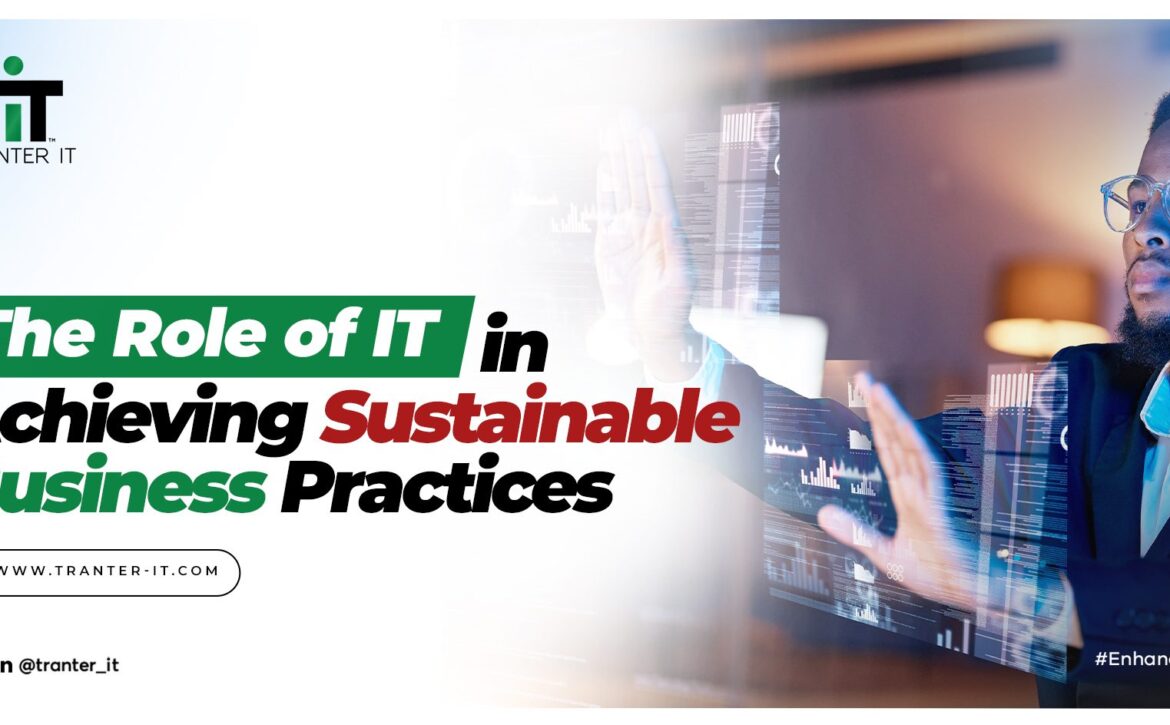
The Role of IT in Achieving Sustainable Business Practices

When most people think about sustainability, they picture recycling bins, solar panels, or tree planting. While those initiatives are important, there’s another major player in the sustainability game that often gets overlooked: Information Technology (IT).

In today’s business world, IT isn’t just about fixing printers or keeping Wi-Fi running. It’s the backbone of how organisations operate, grow, and stay sustainable. For businesses in Nigeria and across Africa, the right IT solutions can reduce waste, lower costs, and build long-term strategies that last.

At Tranter IT, we’ve seen firsthand how ManageEngine IT management solutions are transforming the way companies think about sustainability. Spoiler alert: it’s not just good for the planet, it’s great for business too.

Cutting Waste and Boosting Efficiency  

Running a business often generates unnecessary waste, whether it’s energy, paper, time, or money. Think of idle servers running 24/7, overstuffed email storage, or departments duplicating the same tasks.

With ManageEngine platforms, businesses can:

  • Monitor usage in real-time

  • Streamline operations

  • Spot inefficiencies before they spiral

This leads to reduced energy consumption, smarter use of resources, and smoother operations. That’s sustainability in IT at its most practical.

Smarter Remote Work = Smaller Carbon Footprint  

The pandemic proved that work doesn’t always require a physical office. What many forget is how remote and hybrid work models also support sustainability.

  • Fewer commuters = fewer cars on the road

  • Reduced fuel consumption = lower emissions

  • Smaller office spaces = reduced energy usage

With Tranter IT’s expertise in deploying ManageEngine remote work solutions, Nigerian businesses can support secure hybrid teams while saving on overhead costs. It’s a win for employees, companies, and the environment.

Digital Transformation That Lasts  

Going digital isn’t just about following trends; it’s about creating future-proof systems. Paper-heavy workflows, manual record-keeping, and outdated filing systems waste time and resources.

By adopting digital IT solutions with ManageEngine, businesses can:

  • Store and analyse data efficiently

  • Reduce paper waste

  • Improve collaboration

This transition helps companies in Nigeria move toward greener, more efficient digital operations.

Strengthening Compliance and Governance  

Sustainability is also about responsibility and governance. From data security to regulatory compliance, IT plays a central role in ensuring businesses meet both local and global standards.

ManageEngine solutions help organisations:

  • Monitor security threats

  • Manage sensitive data responsibly

  • Ensure compliance with the regulation

The result? Stronger business resilience and greater trust from customers and stakeholders.

Cost Savings That Fuel Business Growth  

Here’s the part every business leader loves: sustainable IT practices save money.

  • Lower energy bills

  • Less paper usage

  • Optimised workflows

  • Efficient system management

With these cost savings, companies can reinvest in growth, innovation, and people. It’s a triple win, good for profits, good for the planet, and good for communities.

The Bigger Picture for Nigeria’s Business Future  

Nigeria’s fast-growing economy demands more than short-term solutions. Sustainability in IT must be a core business strategy, not an afterthought. Companies embracing sustainable IT practices today will be tomorrow’s leaders.

At Tranter IT, our mission goes beyond distributing software. As the official distributor of ManageEngine solutions in Nigeria, we’re dedicated to helping businesses become more efficient, secure, and sustainable.

Sustainability is no longer just a buzzword; it’s a responsibility. With the right IT management tools, achieving it is easier than ever.

So whether your business is just starting its sustainability journey or already making progress, remember: IT is central to building a greener, more efficient future.

With Tranter IT and ManageEngine, you don’t have to choose between efficiency and responsibility; you can achieve both.

📩 Reach out to us at enquiries@tranter-it.com to get started.